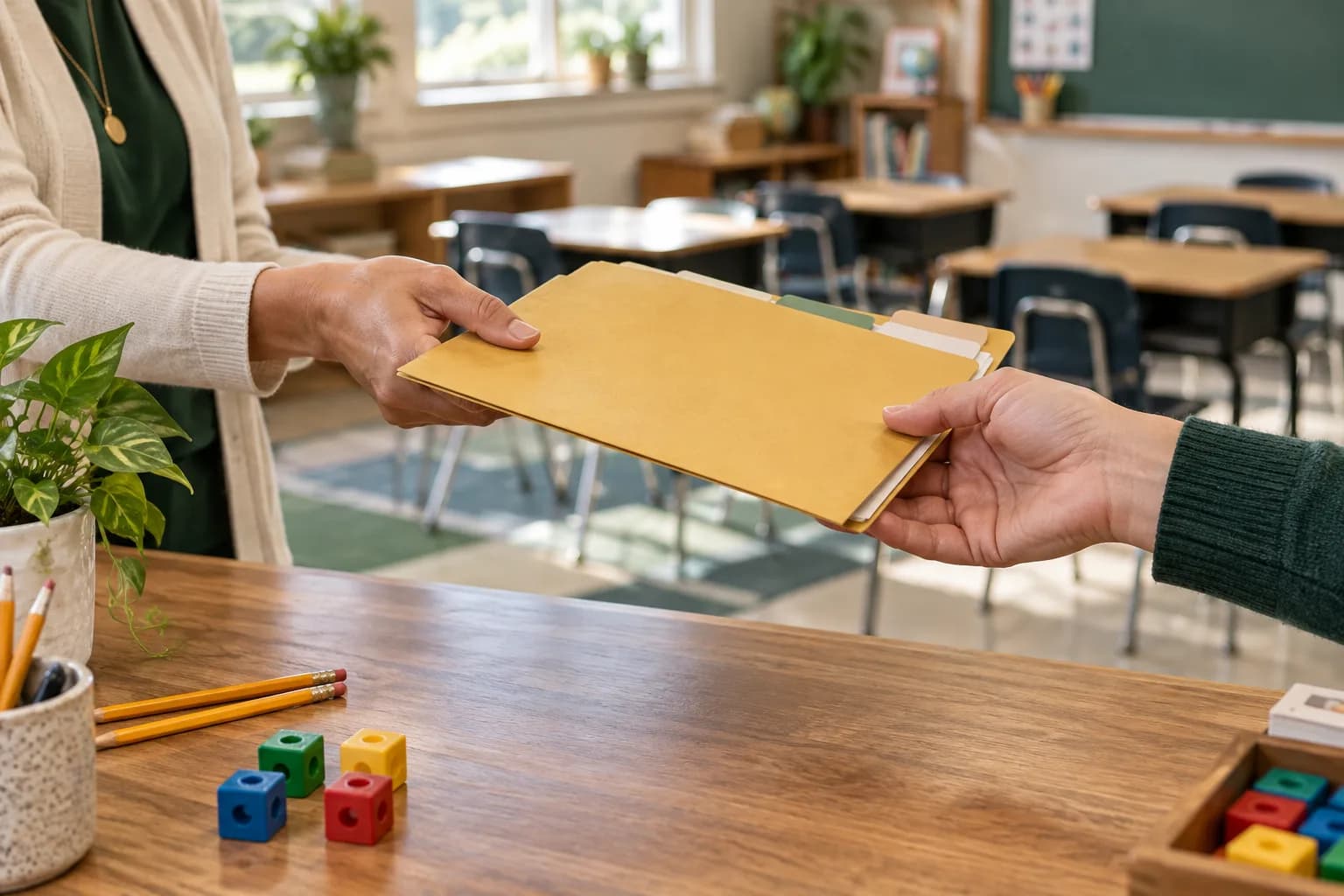
An instructor calls out before a busy afternoon. You find someone to cover, but the lesson materials are in three places and the usual instructor remembers which students need which starting task. The replacement spends the opening minutes asking questions while you interrupt your own work to answer them. Prepare a small coverage packet before you need it, then update only the details that change.
This is a suggested operating routine for tutoring and learning centers. Adapt it to your program, staffing arrangements, and existing supervision procedures. The packet supports an appropriately prepared instructor; it does not replace their training or your center’s established policies.
Separate the center routine from today’s teaching plan
Keep a reusable center guide and a short session plan. The guide explains where materials live, how arrivals and departures are handled, who is leading the shift, and where to find the center’s existing emergency and escalation procedures. The session plan names today’s starting work, planned support, and stopping point. Separating the two means you can update a lesson without rewriting your operating manual.
Put the current version in one agreed location and identify its owner. Date the session plan. If staff use a paper copy during teaching, decide where it goes afterward so outdated instructions do not become tomorrow’s plan. Store student-specific information through your usual restricted staff process, not on an open reception counter.
Write the first action for each student
“Continue math” leaves too much interpretation. A useful note tells the instructor what to put in front of the student, what to notice, and what to do if the task is too difficult or already secure. Use materials your center has approved and make them easy to locate.
- Start: The specific task and where to find it.
- Watch: One learning behavior or skill to observe.
- Support: The prompt, model, or familiar material to use if needed.
- Next: A suitable follow-up task, plus when to ask the lead.
- Record: What the regular instructor will need for the next session.
Fictional handoff: “Alex: begin with the four comparison problems in the blue folder. Watch whether Alex explains the comparison using place value. If a reminder is needed, use the place-value chart beside the folder. If the explanation is clear, use the extension card. Record which problems were independent and one example of the explanation. Ask the shift lead before introducing a new method.”
Describe observable needs instead of labeling a student as difficult, lazy, or behind. Our session review routine offers a way to gather useful teaching observations during ordinary lessons, so the coverage plan does not depend on memory.
Name the decisions the covering instructor can make
A folder cannot answer every question. Identify one shift lead and a backup, with the way to reach each during the session. Explain which decisions the covering instructor can make independently and which need that lead: changing the learning plan, handling an unexpected arrival, answering a parent’s progress question, or resolving a departure discrepancy.
For a question outside the instructor’s brief, give them a usable sentence: “I’m covering today and want to give you an accurate answer. I’ll pass that question to [lead], who will follow up by [agreed time].” The lead must own that follow-up. For longer learning discussions, use a planned parent progress conversation.
Walk through arrival, teaching, and departure
Before students arrive, have the instructor locate the roster, teaching materials, and the current shift lead. Then walk through one fictional arrival and departure using your center’s existing process. A teaching plan is not a substitute for knowing who is currently present or how to handle a mismatch in the attendance record.
If you use digital tools, arrange the appropriate access in advance and have the instructor demonstrate the steps they will actually perform. Do not share another staff member’s credentials. Explain the approved fallback if a device or connection is unavailable, including who will reconcile any temporary records. Our paper-to-digital transition guide includes practical preparation for a consistent front-desk routine.
Ask the instructor to explain the plan back in their own words: “Where will you start, what would make you ask for help, and what will you leave for the next instructor?” Use unclear answers to improve the packet before the session begins.
Close the loop with a short return note
Reserve time at the end of the shift for the handoff back. Keep it factual: work attempted, support used, unfinished work, and questions that still need an owner. “Completed the page” is less useful than “Completed the first six items independently; needed a model for the last two.”
A compact return-note template is: Starting task / What happened / Support needed / Next suggested step / Follow-up owner. Keep any separate incident reporting in your established process. Have the regular instructor review the return note before the next session, and remove superseded instructions from the active packet.
Test the packet on an ordinary day
Try the handoff with a trained colleague while the regular instructor is available. Note missing materials, unclear instructions, time spent finding the starting task, and questions that required an interruption. After the next coverage shift, ask what the substitute wished they had known before opening the folder.
Track preparation minutes, avoidable clarification calls, and whether promised follow-ups were completed. These are process checks, not proof of better learning or higher retention. Improve the most repeated source of confusion first. A short packet that staff keep current is more useful than a detailed binder nobody opens.
Make the attendance routine easier to hand over
Classroom Check-In keeps arrivals, departures, and attendance history together. Explore student check-in for your tutoring center, while keeping teaching plans and coverage notes in your existing staff system.